


Wing Chun
A Close-Range Self Defense Kung Fu System
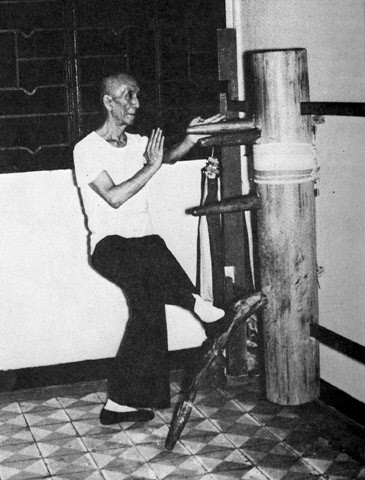 Wing Chun is a close-quarters martial art designed for efficiency, directness, and economy of motion. It is particularly well-suited for self-defense in urban environments and confined spaces such as airplanes, buses, or elevators, where mobility is limited.
Wing Chun gained worldwide recognition through the late Grandmaster Ip Man, as it was the primary system studied by his most famous student, Bruce Lee. This foundation played a crucial role in the development of Lee’s martial philosophy and fighting method.
The Legend of Wing Chun
According to legend, following the destruction of the southern Shaolin Temple by the Qing Dynasty, a Buddhist nun named Ng Mui—one of the Five Elders of Shaolin—managed to escape. Drawing from her deep knowledge of Shaolin martial arts, she sought to create a system that transcended size, strength, and gender. Inspired by the movements of animals, particularly the crane and the snake, she developed a style based on precision, sensitivity, and efficiency rather than brute force.
Ng Mui’s first student was a young woman named Yim Wing Chun (meaning “forever springtime”), who was being forced into marriage by a ruthless warlord. Determined to win her freedom, Yim Wing Chun trained under Ng Mui’s guidance, mastering the art. She challenged the warlord to a duel, declaring that if he defeated her, she would accept his proposal, but if she won, he must leave her and her family alone. Yim Wing Chun decisively defeated him, securing her independence. She later married her true love, Leung Bac-Chou, and passed the art down to him. In honor of her skill and legacy, the system was named Wing Chun.
Wing Chun in Our Kali Combat System
The principles and techniques of Ip Man’s traditional Wing Chun are integrated into our Kali Combat System, enhancing its depth and effectiveness as a complete martial arts discipline. This integration ensures that practitioners develop adaptability across all ranges of combat by blending Wing Chun’s directness, efficiency, and trapping with the versatility of Kali for real-world self-defense.