


Filipino Kali
Weapon Based Warrior Art
Kali is a Filipino Martial Art (FMA) developed to defend against both single opponents and multiple attackers. Training increases a student’s awareness of their surroundings and teaches them how to use everyday objects—such as umbrellas, books, or belts—as effective tools for self-defense. In the hands of a properly trained individual, almost anything can become a weapon.
Kali drills are taught in a fluid, non-restrictive manner to help students develop coordination, timing, speed, awareness, balance, agility, and confidence.
Historical Roots
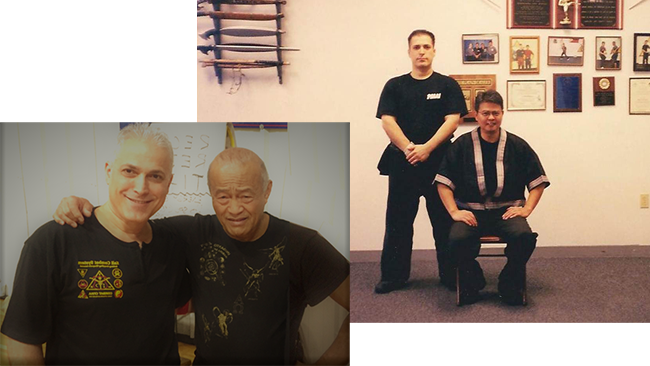
Kali—also known as Escrima or Arnis—was shaped by the turbulent history of the Philippine Islands. Early Filipino martial arts were influenced by Chinese, Southeast Asian, and Moro warrior cultures. Indigenous fighters developed effective, battle-tested systems centered on bladed weapons such as the bolo and barong.
When the Spaniards invaded in the late 1500s, Filipino warriors inflicted such heavy casualties that the Spanish government outlawed bladed weapons and martial arts practice. To preserve their fighting methods, Filipinos disguised their training as folk dances, using wooden sticks to replicate blade movements combined with intricate footwork. These cultural dances—performed openly in front of Spanish authorities—became the predecessors of modern-day Kali systems.
Filipino Kali in Our Kali Combat System
Our Kali system draws from several Filipino traditions, including Marcial Kali, Inosanto Kali, the Warrior Arts of the Moros, and other indigenous combat systems. It is further influenced by Chinese Gung Fu, Southeast Asian martial arts, and Spanish military fencing.
Although Kali is weapon-based at its core, its principles translate seamlessly into practical empty-hand techniques. Footwork, timing, angles of attack, and weapon mechanics apply directly to unarmed fighting, making Filipino Kali a complete warrior system.
Filipino Kali serves as the foundation of our Kali Combat System—a practical, highly effective, and comprehensive approach to real-world self-defense rooted in the rich warrior heritage of the Philippines.